Riichi, WRC 2025 scoring
This guide explains supported hand scoring and settlement. Companion validates a scorable hand, not complete gameplay.
General information
Riichi Mahjong is a four-player game. Players draw and discard tiles until a legal win or an exhaustive draw.
This profile follows WRC 2025 hand scoring and settlement. It does not run a full hanchan.
Companion derives yaku, han, fu, dora, limits, and named yakuman from the confirmed hand and explicit win context.
How to play
- Deal 14 tiles to East and 13 tiles to each other player.
- East discards one tile to start the hand.
- On each turn, draw one tile and discard one tile.
- Call chi, pon, or kan when the rules allow it.
- Declare riichi only with a closed hand that is in tenpai.
- End the hand when a player wins or the wall has no draw.
How to win
- Make a supported standard hand, Seven Pairs, or Thirteen Orphans.
- Include at least one yaku. Dora and red fives do not satisfy this requirement.
- Use a standard four-group hand, Seven Pairs, or Thirteen Orphans.
- Win by tsumo from your draw or ron from another player's discard.
- Companion detects supported named yakuman and adds separate yakuman patterns.
Scoring patterns
The WRC 2025 source lists the yaku below. Companion detects supported yaku, counts bonuses, calculates fu, and applies the limit table.
One han
| Pattern | Pattern value | Condition |
|---|---|---|
| Riichi | 1 han | Declare riichi with a closed hand and win. |
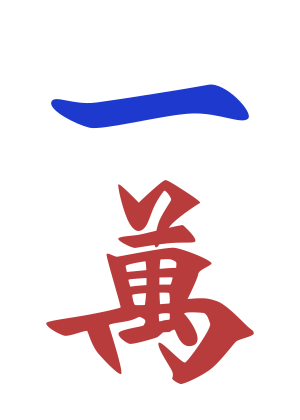
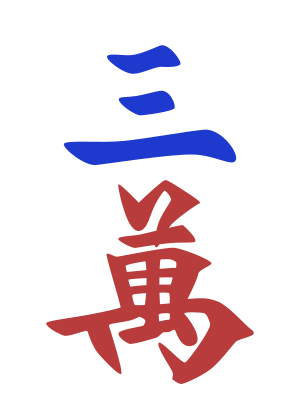
| Example tilesExample tiles: 1 of characters, 2 of characters, 3 of characters | ||
| Ippatsu | 1 han | Win before the next discard after riichi, with no call or quad declaration. Closed hand only. |
| Example tilesExample tiles: 1 of characters, 2 of characters, 3 of characters | ||
| Fully concealed hand (Menzen tsumo) | 1 han | Win by self-draw with a closed hand. |
| Example tilesExample tiles: 1 of characters, 2 of characters, 3 of characters | ||
| Pinfu | 1 han | Closed hand with four sequences, a non-value pair, and a two-sided sequence wait. |
| Example tilesExample tiles: 1 of characters, 2 of characters, 3 of characters, 4 of characters, 5 of characters, 6 of characters, 7 of characters, 8 of characters, 9 of characters, 1 of circles, 2 of circles, 3 of circles, 5 of bamboo, 5 of bamboo | ||
| Twin sequences (Iipeikou) | 1 han | Two identical sequences in one suit. Closed hand only. |
| Example tilesExample tiles: 1 of characters, 2 of characters, 3 of characters, 1 of characters, 2 of characters, 3 of characters | ||
| All inside (Tanyao) | 1 han | The hand contains only suit tiles numbered 2 through 8. Open and closed hands qualify. |
| Example tilesExample tiles: 2 of characters, 3 of characters, 4 of characters, 5 of characters, 6 of characters, 7 of characters, 3 of circles, 4 of circles, 5 of circles, 6 of bamboo, 7 of bamboo, 8 of bamboo, 5 of characters, 5 of characters | ||
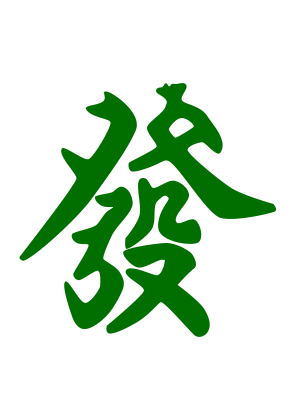
| Value honor (Yakuhai) | 1 han | A triplet or quad of dragons, the seat wind, or the round wind. Matching seat and round winds count twice. |
| Example tilesExample tiles: Red dragon, Red dragon, Red dragon | ||
| Robbing a quad (Chankan) | 1 han | Win with the tile another player uses to promote a quad. |
| Example tilesExample tiles: 1 of characters, 1 of characters, 1 of characters, 1 of characters | ||
| After a quad (Rinshan kaihou) | 1 han | Win on the replacement tile after declaring a quad. |
| Example tilesExample tiles: 1 of characters, 1 of characters, 1 of characters, 1 of characters | ||
| Last tile draw (Haitei) | 1 han | Win by self-draw on the last tile in the live wall. |
| Example tilesExample tiles: 1 of characters, 2 of characters, 3 of characters | ||
| Last tile claim (Houtei) | 1 han | Win on the discard after the last tile in the wall. |
| Example tilesExample tiles: 1 of characters, 2 of characters, 3 of characters | ||


Two han
| Pattern | Pattern value | Condition |
|---|---|---|
| Double riichi | 2 han | Declare riichi on the first discard before any call or concealed quad. It does not also count Riichi. Closed hand only. |
| Example tilesExample tiles: 1 of characters, 2 of characters, 3 of characters | ||
| Seven pairs (Chiitoitsu) | 2 han | Seven different pairs. Closed hand only. The hand always uses 25 fu. |
| Example tilesExample tiles: 1 of characters, 1 of characters, 2 of characters, 2 of characters, 3 of circles, 3 of circles, 4 of circles, 4 of circles, 5 of bamboo, 5 of bamboo, 6 of bamboo, 6 of bamboo, 7 of bamboo, 7 of bamboo | ||
| Full straight (Ikkitsuukan) | 2 han closed, 1 han open | Sequences 1-2-3, 4-5-6, and 7-8-9 in one suit. |
| Example tilesExample tiles: 1 of characters, 2 of characters, 3 of characters, 4 of characters, 5 of characters, 6 of characters, 7 of characters, 8 of characters, 9 of characters, 1 of characters, 2 of characters, 3 of characters, 5 of characters, 5 of characters | ||
| Mixed sequences (Sanshoku doujun) | 2 han closed, 1 han open | The same sequence appears in all three suits. |
| Example tilesExample tiles: 1 of characters, 2 of characters, 3 of characters, 1 of circles, 2 of circles, 3 of circles, 1 of bamboo, 2 of bamboo, 3 of bamboo, 4 of characters, 5 of characters, 6 of characters, 5 of characters, 5 of characters | ||
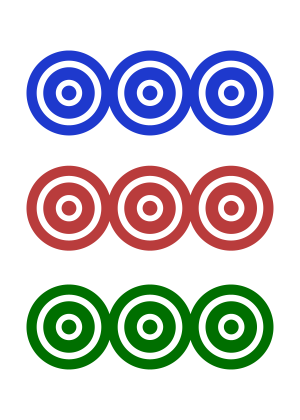
| Mixed triplets (Sanshoku doukou) | 2 han | The same triplet or quad appears in all three suits. |
| Example tilesExample tiles: 1 of characters, 1 of characters, 1 of characters, 1 of circles, 1 of circles, 1 of circles, 1 of bamboo, 1 of bamboo, 1 of bamboo, 2 of characters, 3 of characters, 4 of characters, 5 of circles, 5 of circles | ||
| All triplets (Toitoi) | 2 han | Four triplets or quads and one pair. |
| Example tilesExample tiles: 1 of characters, 1 of characters, 1 of characters, 2 of circles, 2 of circles, 2 of circles, 3 of bamboo, 3 of bamboo, 3 of bamboo, 9 of characters, 9 of characters, 9 of characters, 5 of circles, 5 of circles | ||
| Three concealed triplets (Sanankou) | 2 han | Three concealed triplets or quads. |
| Example tilesExample tiles: 1 of characters, 1 of characters, 1 of characters, 2 of circles, 2 of circles, 2 of circles, 3 of bamboo, 3 of bamboo, 3 of bamboo, 4 of characters, 5 of characters, 6 of characters, 7 of circles, 7 of circles | ||
| Three quads (Sankantsu) | 2 han | Three quads. |
| Example tilesExample tiles: 1 of characters, 1 of characters, 1 of characters, 1 of characters, 2 of circles, 2 of circles, 2 of circles, 2 of circles, 3 of bamboo, 3 of bamboo, 3 of bamboo, 3 of bamboo, East, East | ||
| Common ends (Chanta) | 2 han closed, 1 han open | Every group and the pair contains a terminal or honor. The hand needs a sequence and an honor. |
| Example tilesExample tiles: 1 of characters, 2 of characters, 3 of characters, 7 of characters, 8 of characters, 9 of characters, 1 of circles, 2 of circles, 3 of circles, 7 of circles, 8 of circles, 9 of circles, East, East | ||
| Common terminals (Honroutou) | 2 han | The hand contains only terminals and honors. Add 2 han for All triplets or Seven pairs. This does not combine with Common ends. |
| Example tilesExample tiles: 1 of characters, 1 of characters, 1 of characters, 9 of characters, 9 of characters, 9 of characters, 1 of circles, 1 of circles, 1 of circles, 9 of circles, 9 of circles, 9 of circles, East, East | ||
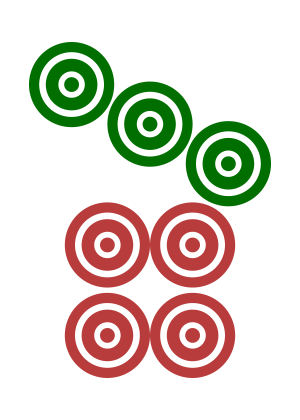
| Little dragons (Shousangen) | 2 han | Two dragon triplets or quads and a pair of the third dragon. The dragon groups add 2 han. |
| Example tilesExample tiles: White dragon, White dragon, White dragon, Green dragon, Green dragon, Green dragon, Red dragon, Red dragon, 1 of characters, 2 of characters, 3 of characters, 7 of circles, 8 of circles, 9 of circles | ||


Three han
| Pattern | Pattern value | Condition |
|---|---|---|
| Double twin sequences (Ryanpeikou) | 3 han | Four sequences form two independent pairs of identical sequences. Closed hand only. |
| Example tilesExample tiles: 1 of characters, 2 of characters, 3 of characters, 1 of characters, 2 of characters, 3 of characters, 4 of characters, 5 of characters, 6 of characters, 4 of characters, 5 of characters, 6 of characters, 9 of characters, 9 of characters | ||
| Common flush (Honitsu) | 3 han closed, 2 han open | Only one numbered suit and honor tiles. |
| Example tilesExample tiles: 1 of characters, 2 of characters, 3 of characters, 4 of characters, 5 of characters, 6 of characters, 7 of characters, 8 of characters, 9 of characters, East, East, East, White dragon, White dragon | ||
| Perfect ends (Junchan) | 3 han closed, 2 han open | Every group and the pair contains a terminal, with no honors. The hand needs a sequence. |
| Example tilesExample tiles: 1 of characters, 2 of characters, 3 of characters, 7 of characters, 8 of characters, 9 of characters, 1 of circles, 2 of circles, 3 of circles, 7 of bamboo, 8 of bamboo, 9 of bamboo, 9 of characters, 9 of characters | ||
Five han
| Pattern | Pattern value | Condition |
|---|---|---|
| Blessing of man (Renhou) | Mangan (5 han) | Win by calling a tile before your first draw, with no call or concealed quad before the win. Closed hand only. It does not combine with other yaku or dora. |
| Example tilesExample tiles: 1 of characters, 2 of characters, 3 of characters | ||
Six han
| Pattern | Pattern value | Condition |
|---|---|---|
| Perfect flush (Chinitsu) | 6 han closed, 5 han open | Only one numbered suit, with no honors. |
| Example tilesExample tiles: 1 of characters, 2 of characters, 3 of characters, 4 of characters, 5 of characters, 6 of characters, 7 of characters, 8 of characters, 9 of characters, 1 of characters, 2 of characters, 3 of characters, 5 of characters, 5 of characters | ||
Yakuman
| Pattern | Pattern value | Condition |
|---|---|---|
| Blessing of heaven (Tenhou) | 1 yakuman | East wins by self-draw from the initial deal, before a concealed quad. Closed hand only. |
| Example tilesExample tiles: 1 of characters, 2 of characters, 3 of characters | ||
| Blessing of earth (Chihou) | 1 yakuman | A non-East player wins by self-draw on the first draw, before any call or concealed quad. Closed hand only. |
| Example tilesExample tiles: 1 of characters, 2 of characters, 3 of characters | ||
| Thirteen orphans (Kokushi musou) | 1 yakuman | One of each terminal and honor, plus one duplicate. Closed hand only. |
| Example tilesExample tiles: 1 of characters, 9 of characters, 1 of circles, 9 of circles, 1 of bamboo, 9 of bamboo, East, South, West, North, White dragon, Green dragon, Red dragon, 1 of characters | ||
| Nine gates (Chuuren poutou) | 1 yakuman | Concealed 1112345678999 in one suit plus one tile of that suit. A quad invalidates the pattern. Closed hand only. |
| Example tilesExample tiles: 1 of characters, 1 of characters, 1 of characters, 2 of characters, 3 of characters, 4 of characters, 5 of characters, 6 of characters, 7 of characters, 8 of characters, 9 of characters, 9 of characters, 9 of characters, 5 of characters | ||
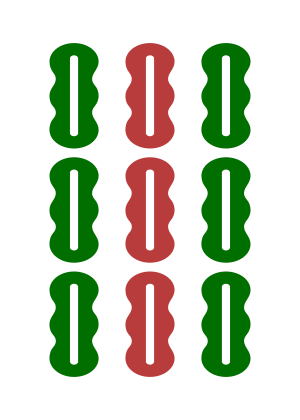
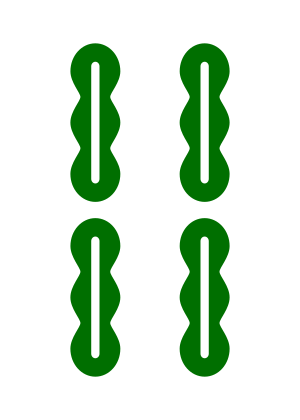
| All green (Ryuuiisou) | 1 yakuman | Only 2, 3, 4, 6, and 8 bamboo and the Green dragon. The Green dragon is not required. |
| Example tilesExample tiles: 2 of bamboo, 3 of bamboo, 4 of bamboo, 2 of bamboo, 3 of bamboo, 4 of bamboo, 6 of bamboo, 6 of bamboo, 6 of bamboo, 8 of bamboo, 8 of bamboo, 8 of bamboo, Green dragon, Green dragon | ||
| Four concealed triplets (Suankou) | 1 yakuman | Four concealed triplets or quads. Win by self-draw or complete the pair with a discard. Closed hand only. |
| Example tilesExample tiles: 1 of characters, 1 of characters, 1 of characters, 2 of circles, 2 of circles, 2 of circles, 3 of bamboo, 3 of bamboo, 3 of bamboo, 4 of characters, 4 of characters, 4 of characters, 7 of circles, 7 of circles | ||
| Four quads (Suukantsu) | 1 yakuman | Four quads. |
| Example tilesExample tiles: 1 of characters, 1 of characters, 1 of characters, 1 of characters, 2 of circles, 2 of circles, 2 of circles, 2 of circles, 3 of bamboo, 3 of bamboo, 3 of bamboo, 3 of bamboo, East, East, East, East, White dragon, White dragon | ||
| Perfect terminals (Chinroutou) | 1 yakuman | Every tile is a terminal. |
| Example tilesExample tiles: 1 of characters, 1 of characters, 1 of characters, 9 of characters, 9 of characters, 9 of characters, 1 of circles, 1 of circles, 1 of circles, 9 of circles, 9 of circles, 9 of circles, 1 of bamboo, 1 of bamboo | ||
| All honors (Tsuu iisou) | 1 yakuman | Every tile is an honor. |
| Example tilesExample tiles: East, East, East, South, South, South, West, West, West, North, North, North, White dragon, White dragon | ||
| Big dragons (Daisangen) | 1 yakuman | Three dragon triplets or quads. |
| Example tilesExample tiles: White dragon, White dragon, White dragon, Green dragon, Green dragon, Green dragon, Red dragon, Red dragon, Red dragon | ||
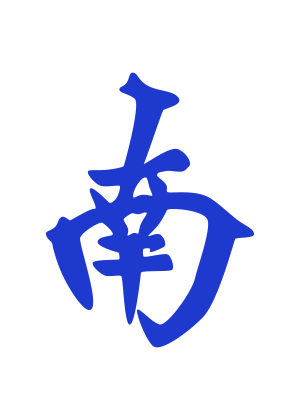
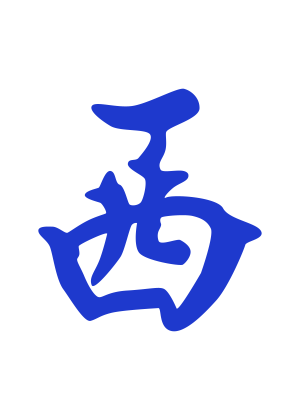
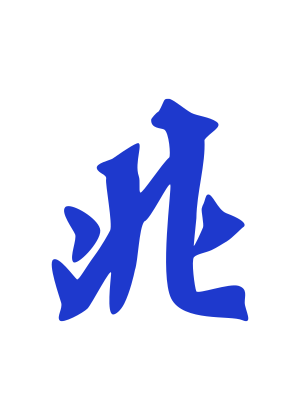
| Little winds (Shousuushii) | 1 yakuman | Three wind triplets or quads and a pair of the fourth wind. |
| Example tilesExample tiles: East, East, East, South, South, South, West, West, West, North, North, 1 of characters, 2 of characters, 3 of characters | ||
| Big winds (Daisuushii) | 1 yakuman | Four wind triplets or quads. |
| Example tilesExample tiles: East, East, East, South, South, South, West, West, West, North, North, North, White dragon, White dragon | ||
Each named yakuman uses an 8,000-point base value. Separate named yakuman combine. A counted 13-han hand uses the same limit base but is not a named yakuman.
Bonuses
| Pattern | Pattern value | Condition |
|---|---|---|
| Dora | +1 han per matching tile | Each tile matching an active dora indicator adds one han. Dora alone is not a yaku. |
| Example tilesExample tiles: 5 of characters | ||
| Ura dora | +1 han per matching tile | Dora beneath active indicators. Count it only when the winner declared riichi. |
| Example tilesExample tiles: 5 of characters | ||
| Kan dora | +1 han per matching tile | Reveal one additional indicator after each successful quad. |
| Example tilesExample tiles: 5 of characters | ||
| Kan ura dora | +1 han per matching tile | Count the extra indicator beneath each kan dora only when the winner declared riichi. |
| Example tilesExample tiles: 5 of characters | ||
How to calculate score
What you enter
This profile settles a four-player table.
Enter the confirmed hand, seats, round wind, win source, declaration status, special event, dora indicators, ura indicators, and manual aka count.
Companion derives fu from the hand shape, wait, groups, pair, and win source. It applies WRC rounding and exceptions.
Base = fu * 2^(han + 2) below 5 han.
Companion detects supported named yakuman. Separate named yakuman patterns add together, while ordinary yaku and bonuses do not add to them.
Regular result
Companion lists each yaku and bonus. It then derives the total han, fu, limit, and score changes.
Yakuman result
Companion lists each supported named yakuman. Each separate pattern adds one yakuman.
Score changes
Riichi uses the profile's base value, then rounds each score up to the next 100 points.
Limit ladder
| Limit | When it applies | Base value |
|---|---|---|
| Mangan | 5 han, or a capped lower hand | 2,000 |
| Haneman | 6 to 7 han | 3,000 |
| Baiman | 8 to 10 han | 4,000 |
| Sanbaiman | 11 to 12 han | 6,000 |
| Yakuman | 13 or more han, or a named yakuman | 8,000 |
A base value of 1,920 rounds to mangan, including 4 han 30 fu and 3 han 60 fu.
- Non-dealer ron
- Winner receives four times base.
- Dealer ron
- Winner receives six times base.
- Non-dealer tsumo
- The dealer pays twice base. Each other opponent pays base.
- Dealer tsumo
- Each opponent pays twice base.
At an exhaustive draw, 3,000 points move from noten players to selected tenpai players. No points move when all players or no players are in tenpai.
Worked example
Example: 1 han, 30 fu, non-dealer ron = 1,000 points
The base is 30 * 2^(1 + 2) = 240. A non-dealer ron uses four times base, then rounds up to the next 100: 1,000 points.
Wind and dealer
East is the dealer. Dealer status changes scores but does not add han.
A seat-wind or round-wind triplet or quad adds 1 han for each matching role. A loose wind or wind pair is not yaku.
Tiles introduction
Number tiles belong to three suits: characters, circles, and bamboo. Each suit has ranks 1 through 9.
Honor tiles are winds and dragons. A standard tile set contains four copies of each numbered and honor tile.
Riichi does not use flowers in this profile. The current tile model does not distinguish red fives.
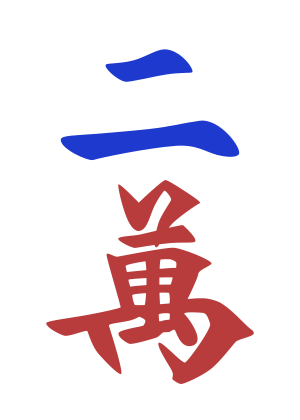
2m 
2p 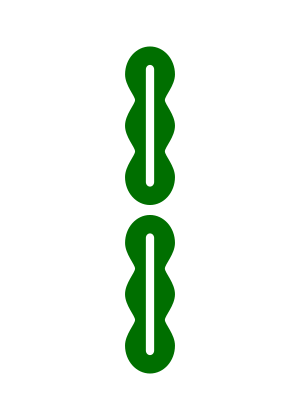
2s 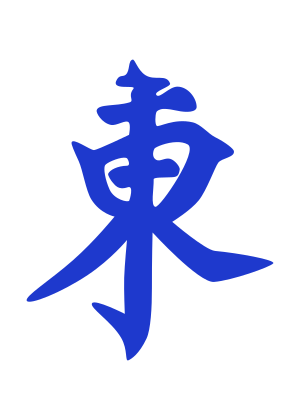
East 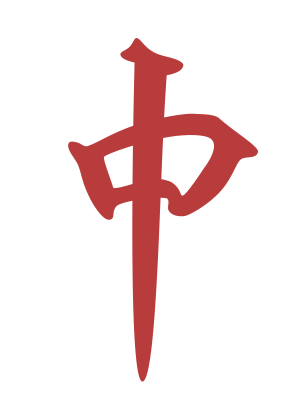
Red
Tiles in the Riichi example
Riichi does not use flowers in this profile. A manual aka count identifies red fives.
Combinations
A group is a sequence, triplet, or quad. A standard winning hand uses four groups and one pair.
Identify each fixed chi, pon, or kan as a declared group. A declared kan can be exposed or concealed.
Sequence
Three consecutive numbered tiles in one suit. Example: 2, 3, and 4 of characters.
Triplet
Three identical tiles. Example: three red dragons.
Quad
Four identical tiles. Example: four East tiles.
Pair
Two identical tiles. A standard hand uses one pair.
This Riichi profile supports Seven Pairs and Thirteen Orphans.
Scoring vocabulary
- Declared group
- A declared group is a fixed chi, pon, or kan. A declared kan can be exposed or concealed.
- Ron
- Ron is a win on another player's discard. The discarder pays the score charge in the applicable profile.
- Tsumo
- Tsumo is a win from your own draw. The other players provide the score charges.
- Han
Han measures yaku and bonuses in a Riichi hand. Companion derives the total after it detects at least one yaku.
Example: two detected one-han awards produce a 2-han result.
- Fu
Fu means minipoints from the hand shape, wait, groups, pair, and win source. Companion calculates and rounds this value.
Example: a 30-fu detected total stays at 30 fu.
- Yaku
A yaku is a qualifying Riichi scoring pattern. A regular win needs at least one yaku.
Example: riichi is one yaku.
- Dora
Dora is a bonus that adds han after the hand has a yaku. Dora alone cannot make a legal Riichi win.
Example: 1 dora adds 1 han after a yaku exists.
- Yakuman
Yakuman is a named limit hand. Companion detects supported named yakuman.
Example: Kokushi musou, or thirteen orphans, uses one of each terminal and honor plus one duplicate.
One Kokushi musou pattern produces one yakuman.
- Result type
- Companion returns a regular han-and-fu result or a named-yakuman result.
Limitations
Companion validates a scorable hand and derives supported WRC values. A manual aka count supplies the optional red-five extension.
Companion excludes continuance counters, riichi deposits, liability, dealer repeats, round progression, and the full hanchan lifecycle.
Source and revision
Source: World Riichi Championship Rules 2025 Version: 20250526.